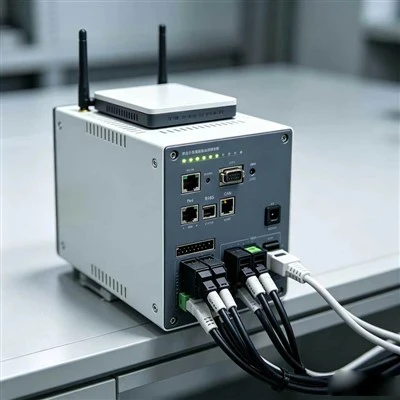

As critical equipment in industrial automation, temperature detection instruments rely primarily on automation technology for their operation. They utilize sensors to detect temperature directly at the source, while transmitters convert the data into signals for analysis. These instruments operate based on principles such as electrical, torque, and force balance, using sensors to measure temperature parameters in the field. Subsequently, the transmitter converts the detected data into transmittable signals and sends them to a display unit for comparative analysis, ensuring the system achieves a state of precise balance.
The platinum resistance thermometer (PRT) is a key component of these instruments; it adjusts its resistance in response to temperature changes to provide accurate measurements, while also offering corrosion resistance and ease of use. As a positive temperature coefficient (PTC) resistor, the PRT plays a central role, with its resistance value fluctuating in direct correlation with temperature changes. By measuring this resistance, the specific temperature value can be directly determined. These instruments are widely used in various temperature detection applications due to their excellent stability, high accuracy, corrosion resistance, and ease of operation. Additionally, while they require an external power supply, they support long-distance signal transmission and cover a temperature measurement range of -200°C to 850°C.