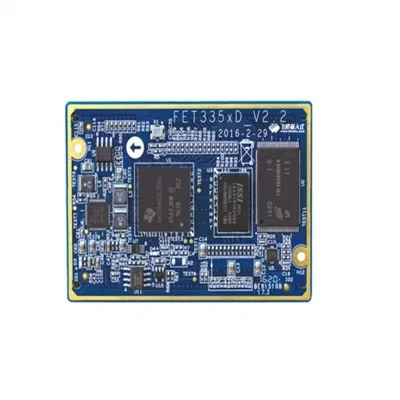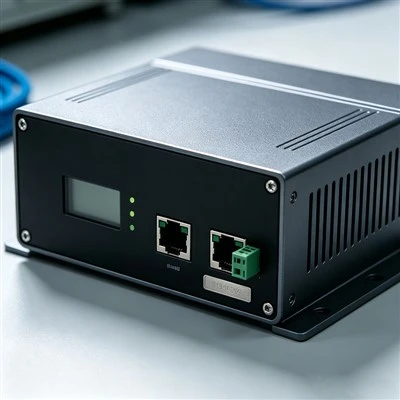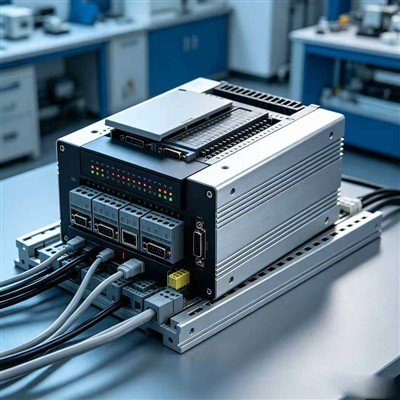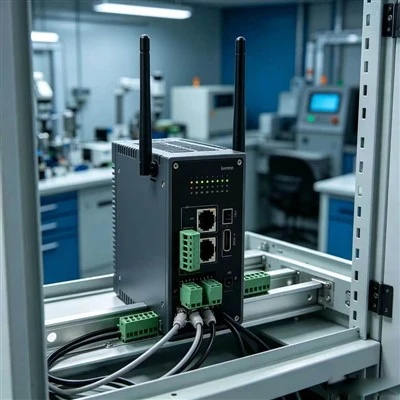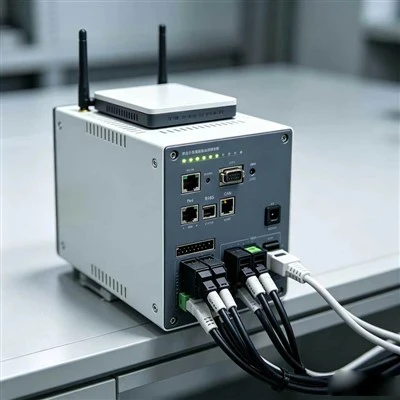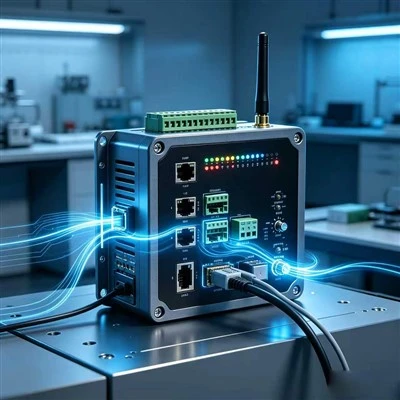

Edge controllers serve as the physical interface and core hub between IT and OT (Operational Technology). Deployed at network nodes on the edge of the Industrial Internet, they play a pivotal role in bridging the "Cloud-Edge-Device" technical architecture. Their core operational model involves "pushing computing power to the edge" and "processing data locally"; they handle data acquisition, protocol parsing, preprocessing, filtering, and encryption close to the data source, uploading only essential data to the cloud or data centers.
Communication for edge controllers is categorized into southbound and northbound channels: southbound communication connects to field devices such as PLCs and sensors, supporting industrial protocols like Modbus, EtherCAT, and Profinet; northbound communication connects to the cloud or Industrial Internet platforms, supporting IT protocols such as MQTT, OPC UA, and HTTP/S, thereby enabling "interconnectivity" between southbound and northbound Industrial Internet applications.
Furthermore, edge controllers utilize software-defined approaches-such as containerization (e.g., Virtual PLCnext), virtualization, and soft PLCs (e.g., CODESYS)-to integrate user management, networking, security, and hardware interfaces. This creates an ecosystem of applications and tools, enabling the flexible deployment and scalability of functions such as control logic, AI inference, and visualization applications.