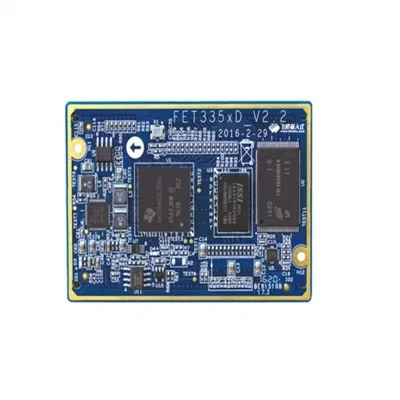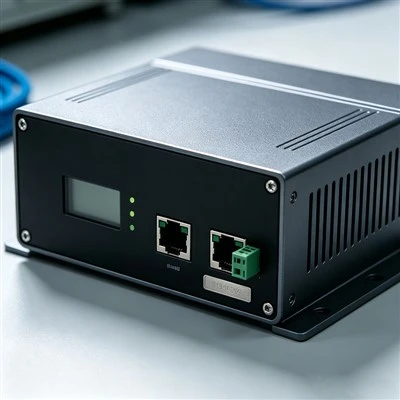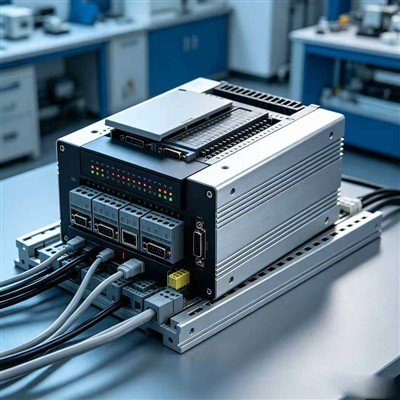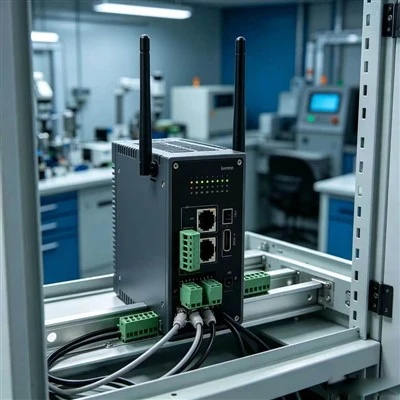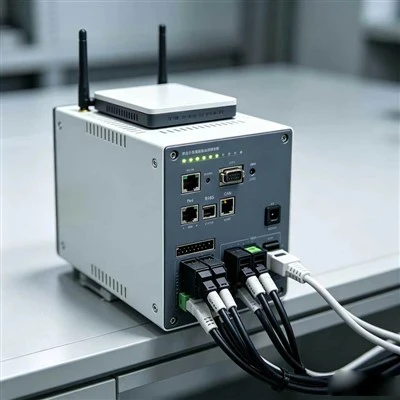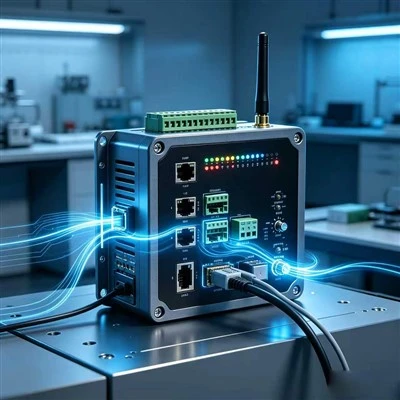

Edge computing gateways come in a wide variety of types to meet the needs of different industries and application scenarios. Common examples include gateways designed for industrial use, smart homes, video surveillance, medical equipment, energy management, agriculture, environmental monitoring, and smart education.
1. Industrial Edge Computing Gateways
Designed specifically for industrial environments, industrial edge computing gateways are key components of the Industrial Internet of Things (IIoT). In automotive manufacturing plants, for instance, they connect various industrial devices-such as CNC machine tools, robotic arms, and sensors-to collect real-time data on operational status, processing parameters, and energy consumption. These gateways possess robust data processing capabilities and operate reliably amidst the complex electromagnetic interference typical of industrial settings. They support multiple industrial communication protocols (e.g., Modbus, OPC UA) and perform preliminary data processing and analysis-such as real-time status monitoring and fault prediction-to enable preventive maintenance, boost production efficiency, and minimize equipment downtime. Additionally, they feature remote monitoring and fault diagnosis capabilities, allowing engineers to resolve issues remotely and ensure the smooth operation of production lines.
2. Smart Home Edge Computing Gateways
Smart home edge computing gateways serve as the core of smart home systems. They connect various home devices-such as smart refrigerators, air conditioners, and lighting systems, as well as temperature, humidity, and door/window sensors-to enable device interconnection and automated control. Taking the edge computing gateway within the Xiaomi smart home ecosystem as an example, users can control home devices remotely via a mobile app and configure personalized scenarios. For instance, a user could turn on the air conditioner and water heater while commuting home from get off work, ensuring a comfortable environment upon arrival. The gateway can also automatically adjust device operations based on indoor environmental data to optimize energy management, thereby enhancing convenience and the level of smart automation in daily life.
3. Video Surveillance Edge Computing Gateways
Video surveillance edge computing gateways play a vital role in sectors such as security monitoring and intelligent transportation. In urban traffic monitoring systems, they connect to numerous cameras to process video data in real time. Equipped with powerful video processing capabilities, they handle tasks such as real-time compression, decoding, and analysis-including intelligent license plate recognition, traffic violation detection, and traffic flow analysis-thereby improving the efficiency and security of video transmission. Upon detecting anomalous events, such as traffic accidents or vehicles driving against the flow of traffic, the gateway can trigger immediate alerts, providing robust support for public safety and traffic management. It also enables the storage and management of video data, facilitating subsequent retrieval and traceability.
4. Medical Equipment Edge Computing Gateway
Medical equipment edge computing gateways are widely used in the healthcare sector. In telemedicine scenarios, they connect to medical devices such as ECG machines, blood pressure monitors, blood glucose meters, and thermometers to collect patients' physiological data in real time. These gateways feature high precision, high reliability, and low latency, ensuring data accuracy and real-time performance. Doctors can remotely monitor patients' health status in real time, promptly detect abnormalities, and take appropriate therapeutic measures. They also facilitate the storage and analysis of medical data, providing data support for clinical research, disease diagnosis, and treatment planning, thereby driving the development of intelligent and remote medical services.
5. Energy Management Edge Computing Gateway
Energy management edge computing gateways are crucial in fields such as smart grids and new energy. In smart grids, they connect to power equipment-including electricity meters, inverters, transformers, and battery energy storage systems-to collect real-time data on power distribution, such as voltage, current, and power output. Through real-time monitoring and analysis of power data, they enable optimized energy allocation and dispatching; for instance, power output can be adjusted based on electricity demand at different times to reduce energy costs. They also allow for remote monitoring and fault diagnosis of power equipment, enabling the timely detection and resolution of issues, thereby enhancing the stability and safety of the power system and ensuring efficient energy supply.
6. Agricultural Edge Computing Gateway
Agricultural edge computing gateways serve as a vital pillar of smart agriculture. On modern farms, they connect to devices such as soil moisture sensors, temperature sensors, light sensors, weather stations, and irrigation equipment to collect real-time agricultural environmental data. Based on this data, users can monitor soil moisture levels and climatic conditions in real time, optimizing agricultural activities such as irrigation, fertilization, and pest control. For example, irrigation equipment can be automatically activated when soil moisture drops below a set threshold, and fertilizer application can be precisely controlled based on crop growth cycles and environmental conditions. These gateways also enable the storage and analysis of agricultural data, providing a foundation for precision agriculture management and fostering intelligent, refined agricultural production.
7. Environmental Monitoring Edge Computing Gateway
Environmental monitoring edge computing gateways play a key role in environmental protection and management. In urban air quality monitoring, it connects various sensors-such as those for air pollutants, water quality, noise, and radiation-to collect environmental monitoring data in real time. Characterized by high precision, reliability, and real-time capabilities, it ensures the accuracy and timeliness of the data. Upon detecting environmental anomalies-such as excessive air pollution or water contamination-it issues timely alerts, providing robust support for environmental management and protection. Furthermore, the storage and analysis of environmental data provide a rich resource for scientific research, thereby facilitating environmental protection and sustainable development.
8. Smart Education Edge Computing Gateway
The smart education edge computing gateway is driving transformation in the education sector. In smart classrooms, it connects devices such as smart whiteboards, projectors, and student tablets to create an intelligent, interactive teaching environment. Teachers can use the gateway to remotely control instructional equipment and present diverse teaching resources-including videos, animations, and courseware-thereby enhancing teaching effectiveness. It also captures real-time student learning data-such as quiz performance, study duration, and engagement levels-enabling data-driven, personalized instruction that meets the unique needs of different students and improves the overall quality and efficiency of education.
Different types of edge computing gateways play unique roles in their respective fields, driving the digital and intelligent transformation of various industries. As technology continues to advance, the functionality of edge computing gateways will become increasingly sophisticated, and their application scenarios will expand significantly.