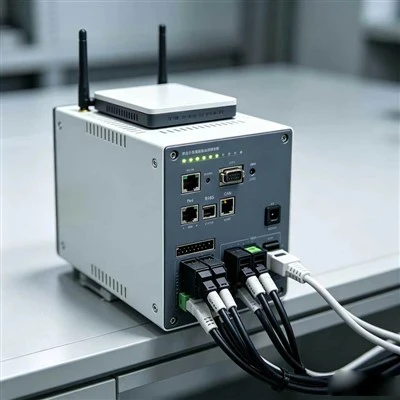
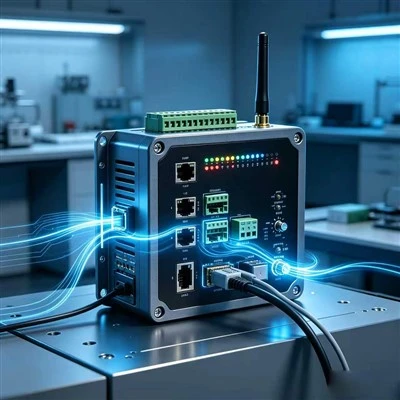
Broadly speaking, network switches fall into two categories: WAN switches and LAN switches. WAN switches are primarily used in the telecommunications sector to provide the underlying infrastructure for communications, whereas LAN switches are used within local area networks to connect end devices such as PCs and network printers. Based on transmission media and speed, they can be classified into types such as Ethernet, Fast Ethernet, Gigabit Ethernet, FDDI, ATM, and Token Ring switches. In terms of application scale, they are categorized into enterprise-level, departmental-level, and workgroup-level switches. While classification criteria vary among manufacturers, generally speaking, enterprise-level switches are rack-mounted; departmental-level switches may be rack-mounted (with fewer slots) or fixed-configuration units; and workgroup-level switches are fixed-configuration units (offering more basic functionality). From the perspective of application scale, a switch supporting over 500 network nodes in a large enterprise is classified as enterprise-level; one supporting fewer than 300 nodes in a medium-sized enterprise is departmental-level; and one supporting fewer than 100 nodes is workgroup-level.

 English
- English
- Français
- Deutsch
- 日本語
- Italiano
- Español
- Português
- русский
- українська
- Eesti
- فارسی
- Latviešu
- Čeština
- Norsk
- slovenščina
- O'zbek
- Kreyòl Ayisyen
- bosanski
- Gaeilgenah Éireann
- Bai Miaowen
- Malti
- עברית
- dansk
- hrvatski
- Indonesia
- Svenska
- suomi
- Cymraeg
- Srbija jezik (latinica)
- Polski
- 한국어
- বাংলা
- Melayu
- Български
- ไทย
- Lietuvių
- Ελληνικά
- عربي
- Nederlands
- Türkçe
- magyar
- slovenčina
- Català
- اردو
- हिंदी
- Việt Nam
- íslenska
- România limbi