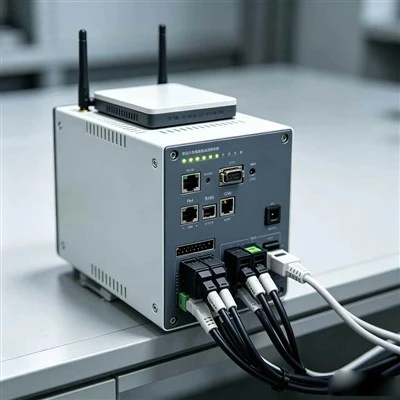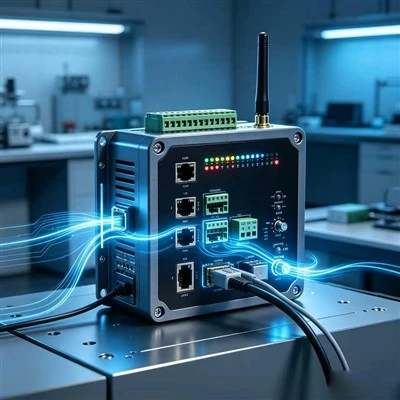

Layer 3 switches possess powerful capabilities for routing and data forwarding, bandwidth allocation, multimedia transmission, and security control. They play a vital role by enabling the segmentation of user groups based on distinct communication service systems and facilitating the efficient transmission of educational services.
Beyond their superior performance, Layer 3 switches offer features absent in traditional Layer 2 switches-features that bring significant benefits to the construction of campus networks and metropolitan educational networks, as outlined below:
High Scalability
When connecting multiple subnets, a Layer 3 switch establishes only a logical connection with the Layer 3 switching module; unlike traditional setups requiring external routers, this approach eliminates the need for additional ports, thereby protecting investments in campus and metropolitan educational networks while meeting the demands of rapid network application growth over a 3-to-5-year horizon.
High Cost-Effectiveness
Layer 3 switches are capable of connecting large-scale networks and can essentially replace certain traditional routers, yet they are priced comparably to Layer 2 switches. The cost of a 100 Mbps Layer 3 switch is merely in the tens of thousands of yuan-roughly the same as a high-end Layer 2 switch.