
High-Speed Data Forwarding: Handling the Core Transmission Load
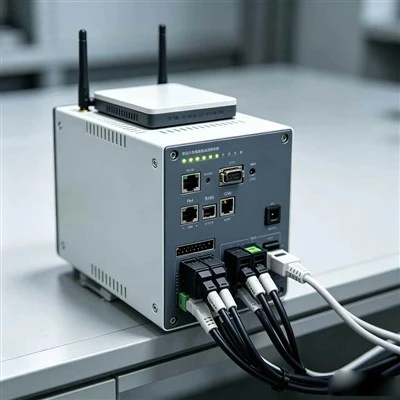
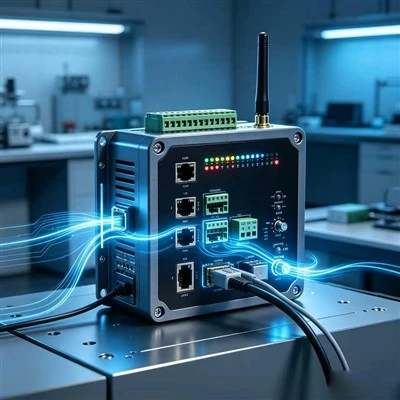
The core switch serves as the traffic hub for the entire LAN; its primary distinction from standard access switches is its capability for high-speed data forwarding. Network data from all floors, workshops, and remote sites converges at the core switch for centralized distribution and transmission. With massive bandwidth and high-speed forwarding capabilities, it supports simultaneous connectivity and data transfer for thousands of terminal devices without experiencing lag or congestion. It acts as the transit point for surveillance streams, office data, and business system data across enterprises, factory complexes, and mining sites, forming the foundation for smooth network operation.
Aggregating Downstream Devices and Centralizing Terminal Management
While standard access switches handle only local devices, the core switch aggregates all downstream switches, wireless APs, and terminal devices. Every computer, camera, industrial control device, and office terminal in the network is ultimately managed centrally by the core switch. IT staff can monitor the online status, port activity, and terminal connection details of the entire network directly from the core device-eliminating the need to configure downstream devices individually-which significantly simplifies network management and makes it ideal for medium-to-large LAN deployments.
VLAN Segmentation for Network Isolation
This is one of the core switch's most practical features. In network deployment, the core switch allows for the creation of separate VLANs to isolate office, surveillance, production, and Wi-Fi networks from one another. Restricting access between network segments prevents office traffic from competing with critical production traffic and ensures that a single infected or malfunctioning terminal does not cripple the entire network. Furthermore, specific inter-segment communication permissions can be configured as needed, balancing security with usability-a fundamental practice for network security in enterprises and industrial facilities.
Intelligent Traffic Scheduling: Prioritizing Critical Business Operations
Core switches support QoS (Quality of Service) traffic prioritization, allowing administrators to manually assign network priority levels to different types of traffic. For instance, highest priority can be assigned to industrial control data, emergency surveillance feeds, and core business systems in mining or manufacturing environments, while lower priority is allocated to routine office browsing, downloads, and entertainment traffic. **Prioritizing Critical Traffic During Network Congestion**
When the network is congested, the device prioritizes the transmission of critical business data. This ensures smooth operation and zero packet loss for production scheduling, surveillance video feeds, and business systems, preventing non-core traffic from consuming excessive bandwidth and disrupting essential tasks.
**Redundant Network Architecture to Eliminate Total Network Outages**
Professional-grade medium-to-large networks utilize dual core switches for redundancy. These core switches support features such as stacking, link aggregation, and ring network protection. In the event of a single device failure or a broken network cable, the system switches to the backup link or device within milliseconds. This ensures uninterrupted network connectivity for all devices, making the failover seamless and imperceptible to users. It effectively resolves issues related to single points of failure and total network paralysis, making it ideal for environments where network downtime is unacceptable, such as mines, factories, and corporate office buildings.
**Security Protection and Control: Blocking Unauthorized Access and Attacks**
The core switches come equipped with built-in features such as basic firewall capabilities, port security, address binding, and storm attack protection. They allow for the binding of device IP and MAC addresses to prevent unauthorized devices from accessing the internal network. They can block common network threats-including broadcast storms, port scanning, and malicious attacks-and limit bandwidth or the number of connected devices on specific ports. By intercepting risks at the network core, the system prevents unauthorized network usage, illicit access, and the spread of viruses, comprehensively safeguarding internal data and ensuring network stability.
**Layer 3 Routing Support for Inter-Subnet Communication**
While standard Layer 2 switches only facilitate communication between devices on the same subnet, these core switches feature Layer 3 routing capabilities. They can independently handle data forwarding between different VLANs and subnets without the need for additional routers. This results in faster cross-subnet access, lower latency, and greater stability. Whether it involves an office subnet accessing a server or a surveillance subnet connecting to storage devices, the core switch handles these tasks directly, meeting the complex networking requirements of multi-subnet and multi-service environments.